Firearms Restoration, Repair, Cleaning, Conservation and Manufacture
The British BREN Mk 1: A Tough Machine Gun with an Unexpected American Twist
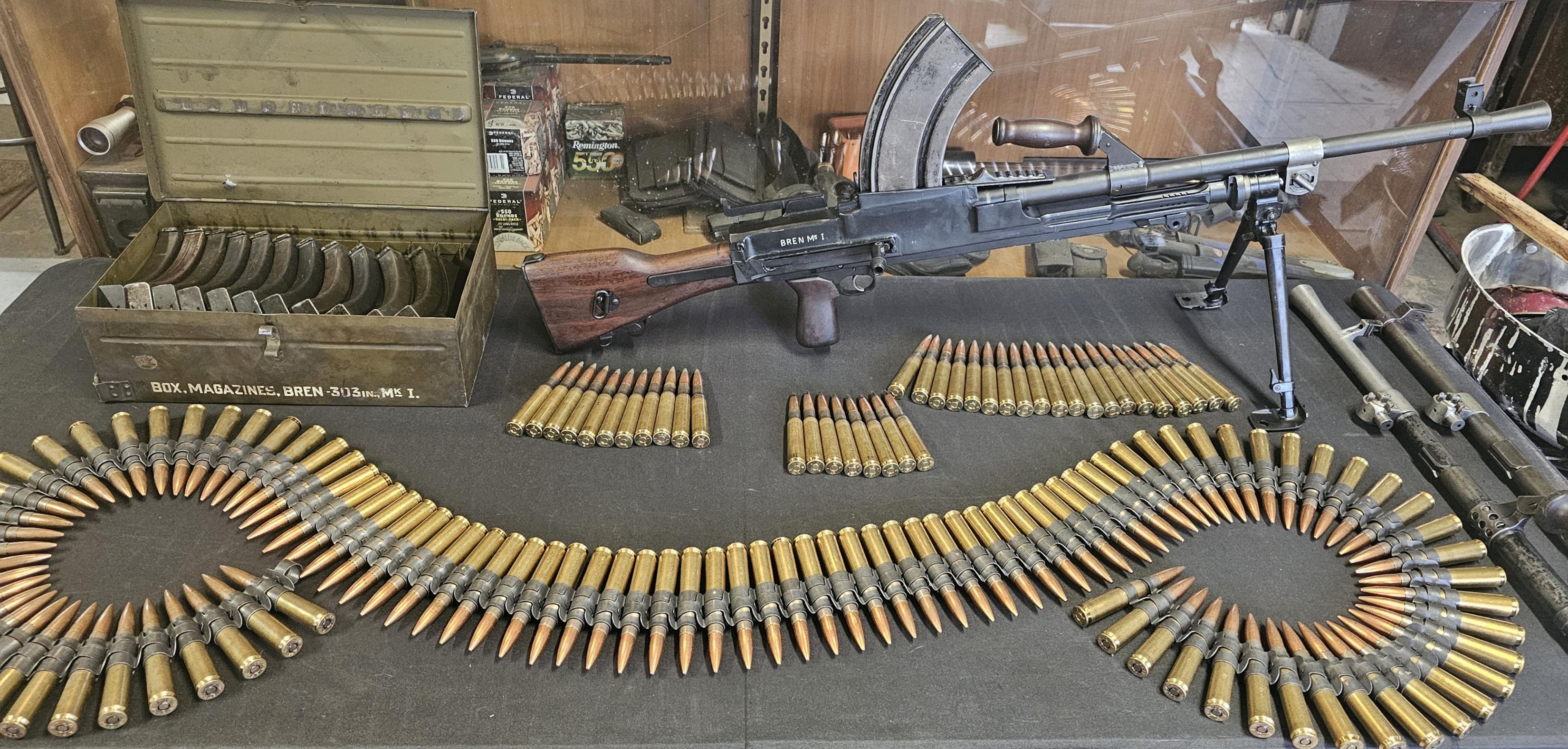
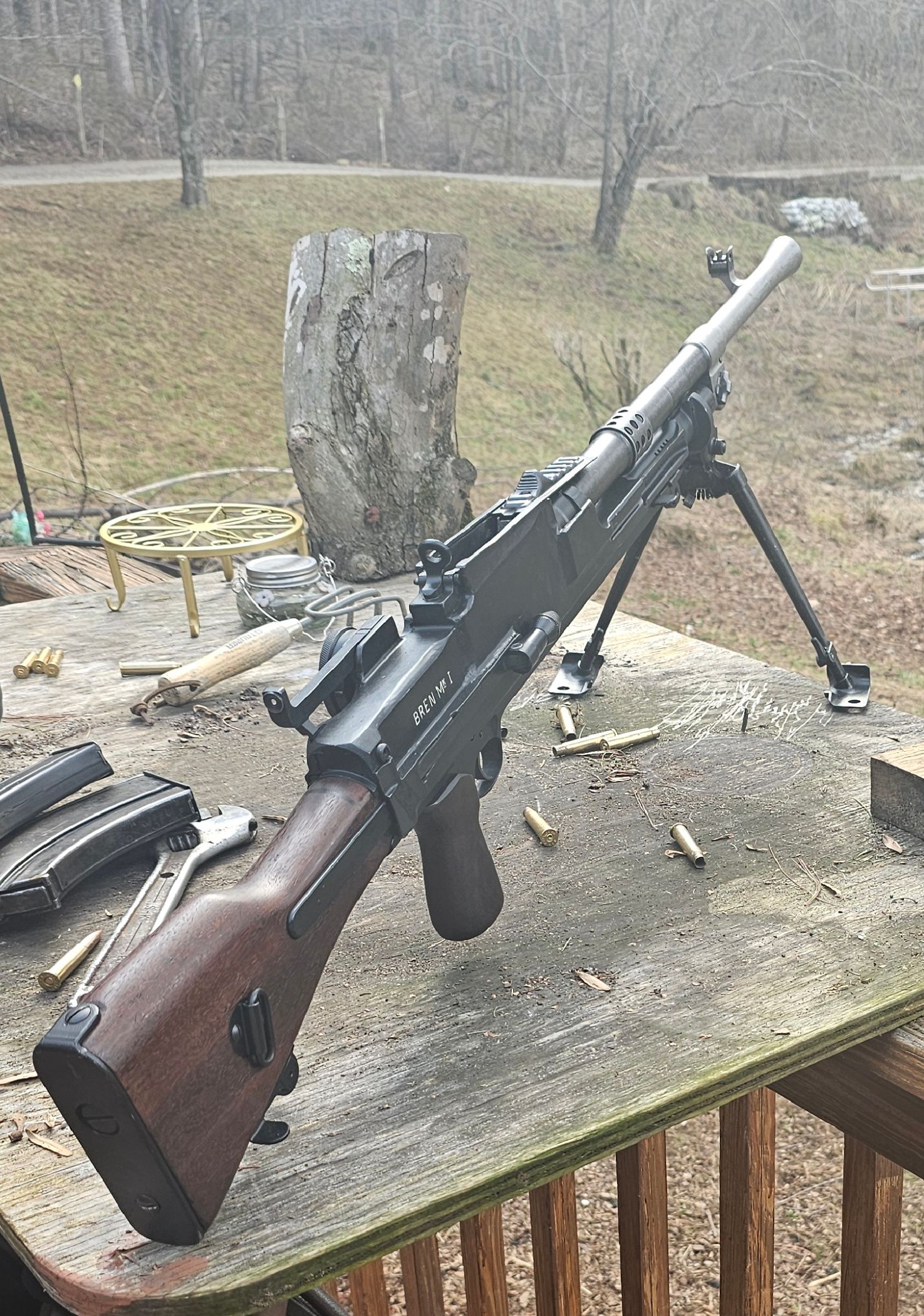
Sometimes I'm lucky and get a really interesting piece of history that visits my shop. This one came in a few weeks ago and I jumped at the opportunity to fire off a few magazines - "Just because." Anyone familiar with the old British .303 ammunition will tell you it has a bit of recoil - but this beauty - weighing in at 22 pounds empty had almost zero recoil. Here's a brief summary of the iconic Bren Mk 1.
The Bren Mk1 stands out as one of the most reliable and effective light machine guns of the 20th century. Its story begins in the 1930s when the British Army was looking for a modern weapon to replace outdated models from World War I. They found inspiration in a Czech design from the Brno factory, the ZB vz. 26. British engineers at the Royal Small Arms Factory in Enfield adapted it for their .303 ammunition, creating what became known as the Bren – short for Brno and Enfield.
The Mk1 version entered production in 1937. It was a gas-operated gun weighing around 22 pounds with a length of about 45 inches. Its standout features included a curved 30-round magazine mounted on top, a quick-change barrel system to prevent overheating during sustained fire, and a folding bipod for stable shooting from the prone position. Soldiers could fire it at up to 520 rounds per minute, though short bursts were preferred for accuracy and to avoid wasting ammo. It was accurate up to 600 yards and tough enough to handle dirt, sand, and rough conditions.
In World War II, the Bren became the backbone of British and Commonwealth infantry sections. One gun per squad provided crucial suppressive fire while riflemen supported it. It saw heavy use in every theater – from the deserts of North Africa to the jungles of Burma and the beaches of Normandy. Even after massive losses at Dunkirk, production ramped up in Britain, Canada, and Australia. Simpler Mk2 and Mk3 versions followed to speed up manufacturing, but the original Mk1 set the gold standard. Captured Brens were even used by German forces.
After the war, the Bren continued its service. British troops carried it into the Korean War and colonial conflicts like the Malayan Emergency. Many guns were later converted to fire the 7.62mm NATO round and redesignated as the L4 series. These versions remained in use into the 1980s and 1990s, appearing in the Falklands War and even the 1991 Gulf War with reserve units.
While the United States never officially adopted the Bren, preferring their own Browning Automatic Rifle, American forces still encountered it. In the Pacific theater during WWII, U.S. Army units operated British Universal Carriers – nicknamed Bren Gun Carriers – in campaigns such as Guadalcanal and the defense of Bataan. These vehicles were often armed with Brens for extra firepower. The most notable later interaction came during the 1983 U.S. invasion of Grenada, where American troops seized several Bren guns, including older Mk models and updated L4s, from Grenadian stockpiles.
Today, the Bren Mk1 is a collector’s item. Modified semi-automatic versions are legal in the U.S., keeping the legend alive. Its blend of simplicity, durability, and firepower earned it a special place in military history.
Now that the snow is gone and spring cleaning is in progress again - bring your dusty firearms down to the shop for professional cleaning and service. For the next four weeks I have a special deal on barrel threading for all calibers .17 up to .50 for just $99. For most designs.
As always - be safe out there, my friends.
Captain "African" Jon
Call or text (423) 957-1149 to schedule,
312 West Street, Suite #1, Roan Mountain, TN 37687.
Serving collectors, hunters, and firearm owners across
Roan Mountain, Elizabethton, Johnson City, Tennessee
North Carolina, South Carolina, Virginia and Georgia
Your second block of text...